
Greetings, fellow stargazers,
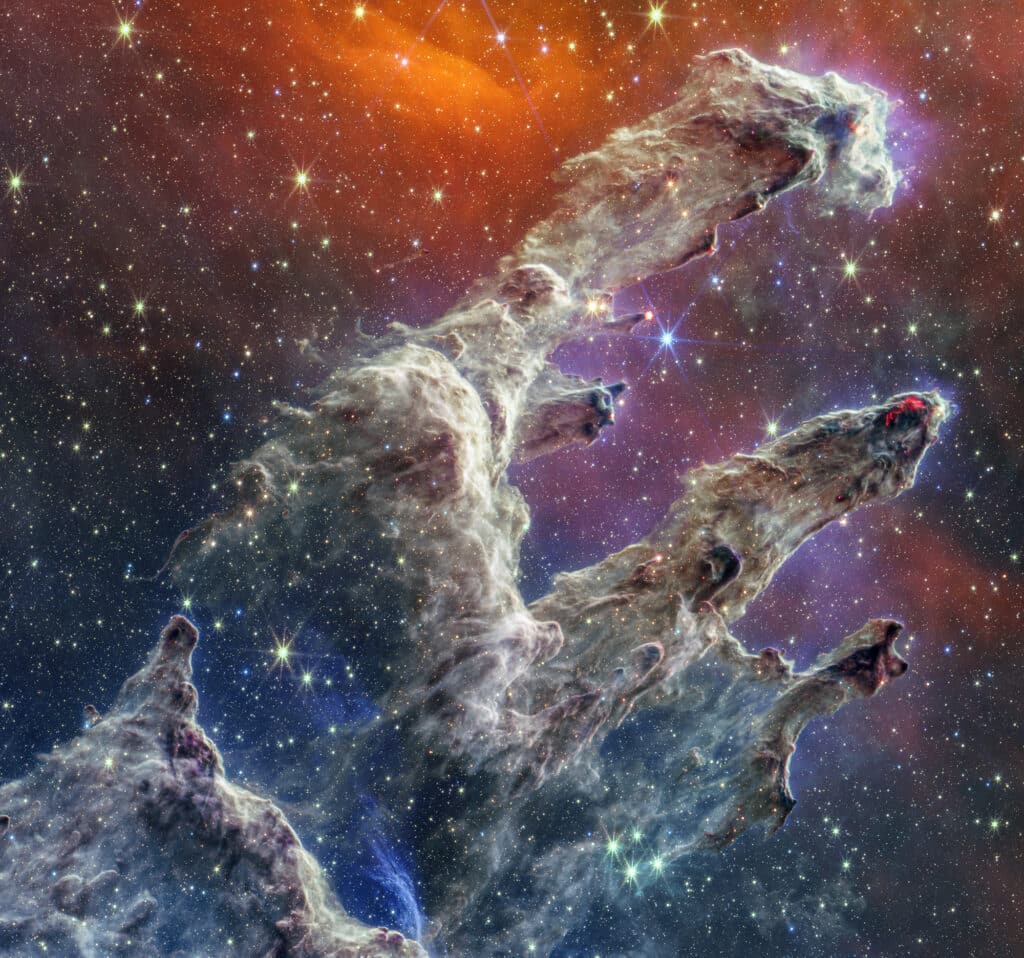
Today, I invite you to journey with me to one of the most iconic and awe-inspiring regions of our universe, the Pillars of Creation. This magnificent image, captured by the Hubble Space Telescope, has captivated the hearts and minds of people around the world. But what makes this image so extraordinary?
The Pillars of Creation
The Pillars of Creation are located in the Eagle Nebula, also known as M16, approximately 7,000 light-years away from Earth. These towering structures of gas and dust are the birthplace of new stars. Each pillar is composed of interstellar hydrogen gas and dust, which serve as the raw materials for star formation. The towering columns are several light-years in length, giving us a glimpse into the vastness of the cosmos.
What makes the Pillars of Creation particularly fascinating is their dynamic nature. While the Hubble image captures a snapshot in time, these structures are constantly evolving. The powerful ultraviolet light from newly formed stars erodes the pillars, creating a mesmerizing interplay of creation and destruction.
Here’s an intriguing tidbit: The image you see today is a glimpse into the past. Due to the immense distance, the light from the Pillars of Creation takes thousands of years to reach us. Thus, we are observing them as they were 7,000 years ago. In reality, these pillars may have already dissipated, their legacy imprinted in the light that continues to travel across the universe.
The Hubble Space Telescope has been instrumental in deepening our understanding of the universe. Launched in 1990, it has provided us with breathtaking images and invaluable data, revolutionizing our knowledge of space. The Pillars of Creation, first photographed in 1995 and revisited in 2014 with advanced imaging technology, remain one of its most iconic contributions.
As you admire the Pillars of Creation, consider the profound processes at work. The formation of stars within these pillars is a testament to the ever-changing and dynamic nature of the universe. Each star born within these structures contributes to the cosmic tapestry, influencing the evolution of galaxies and the potential for life beyond our own planet.
Clear skies,
R. Skywalker